
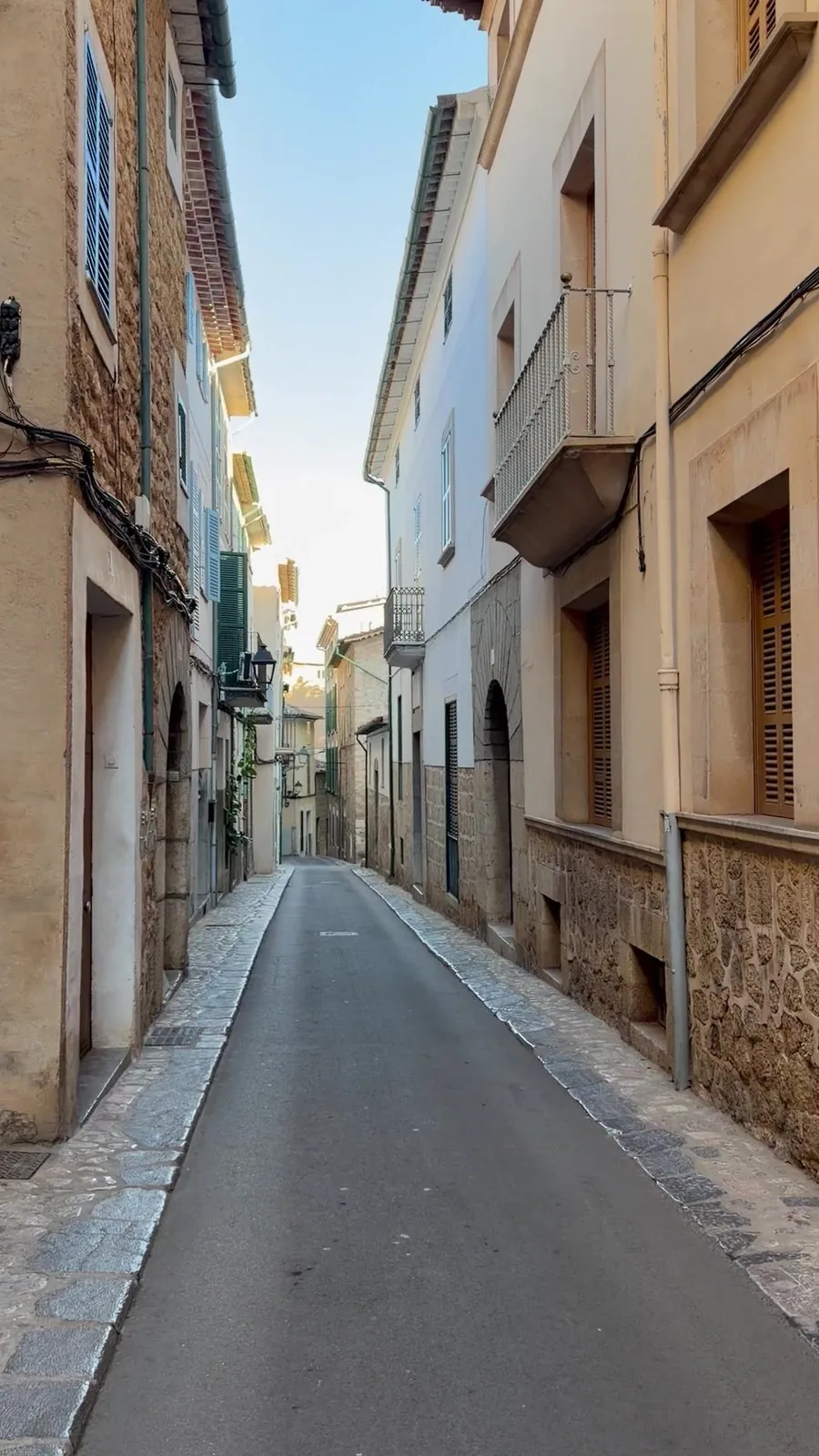
Saturday in Sóller. Early in the morning the lanes still seem to belong to no one. One side lies in shade, the other already in the sun, and most doors are closed.
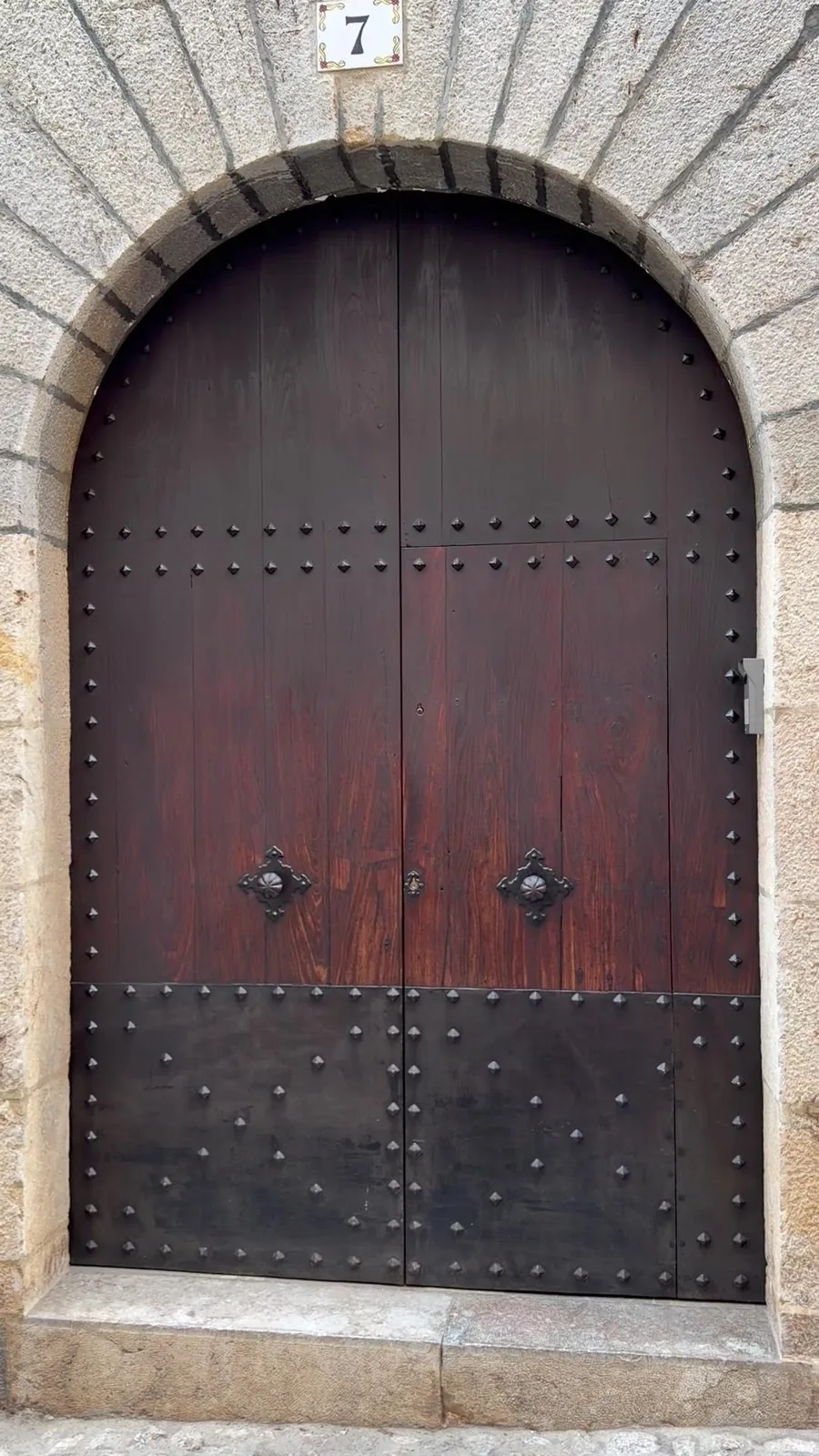
I stop at one of them: a round arch of natural stone, dark wood, heavy iron studs, and above it the tile with the number 7. That is how the day begins here.
Later in the morning nothing is left of that quiet.
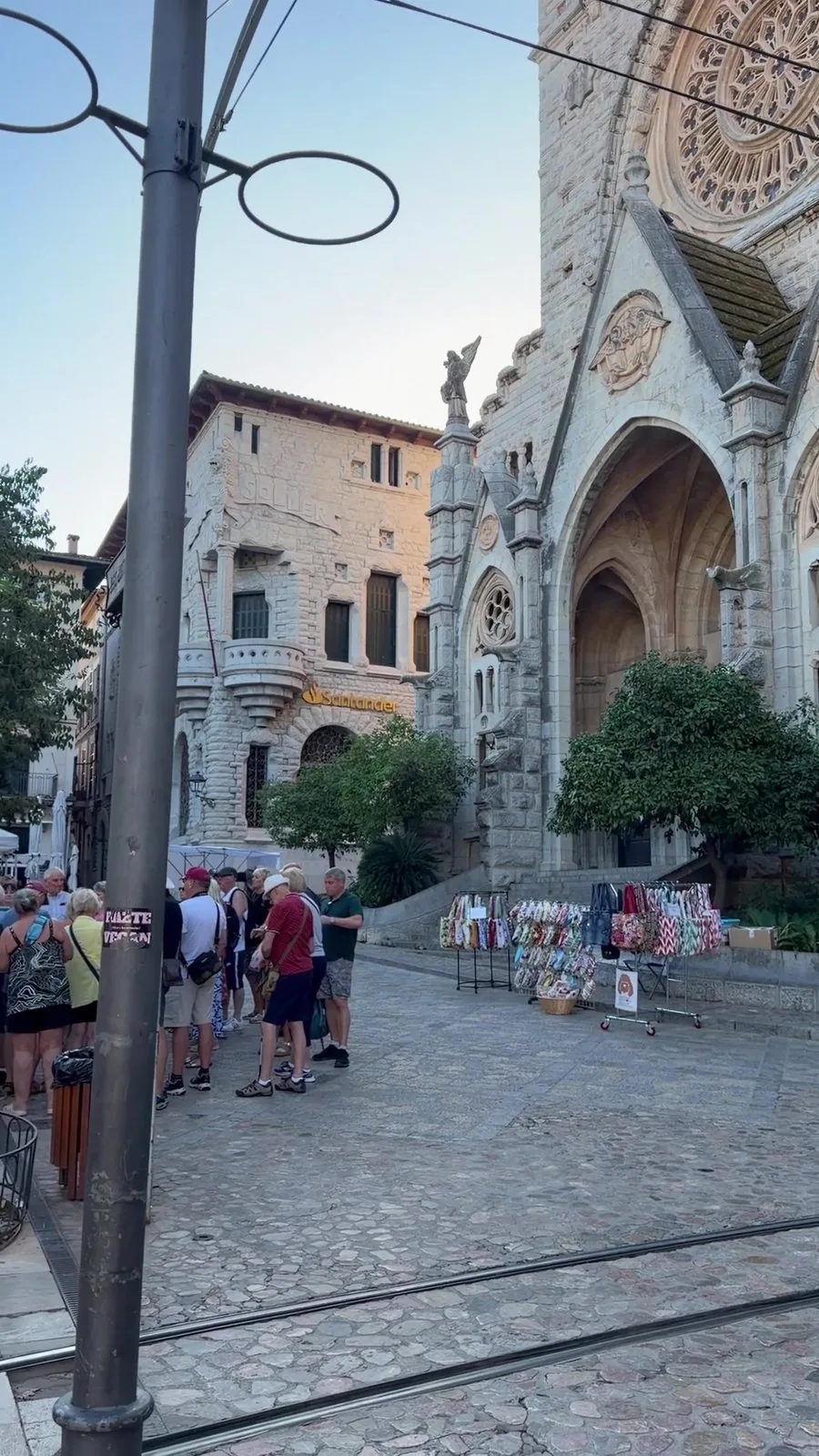
The market spreads out around the church of Sant Bartomeu and into the surrounding lanes. Flowers, bread and voices.
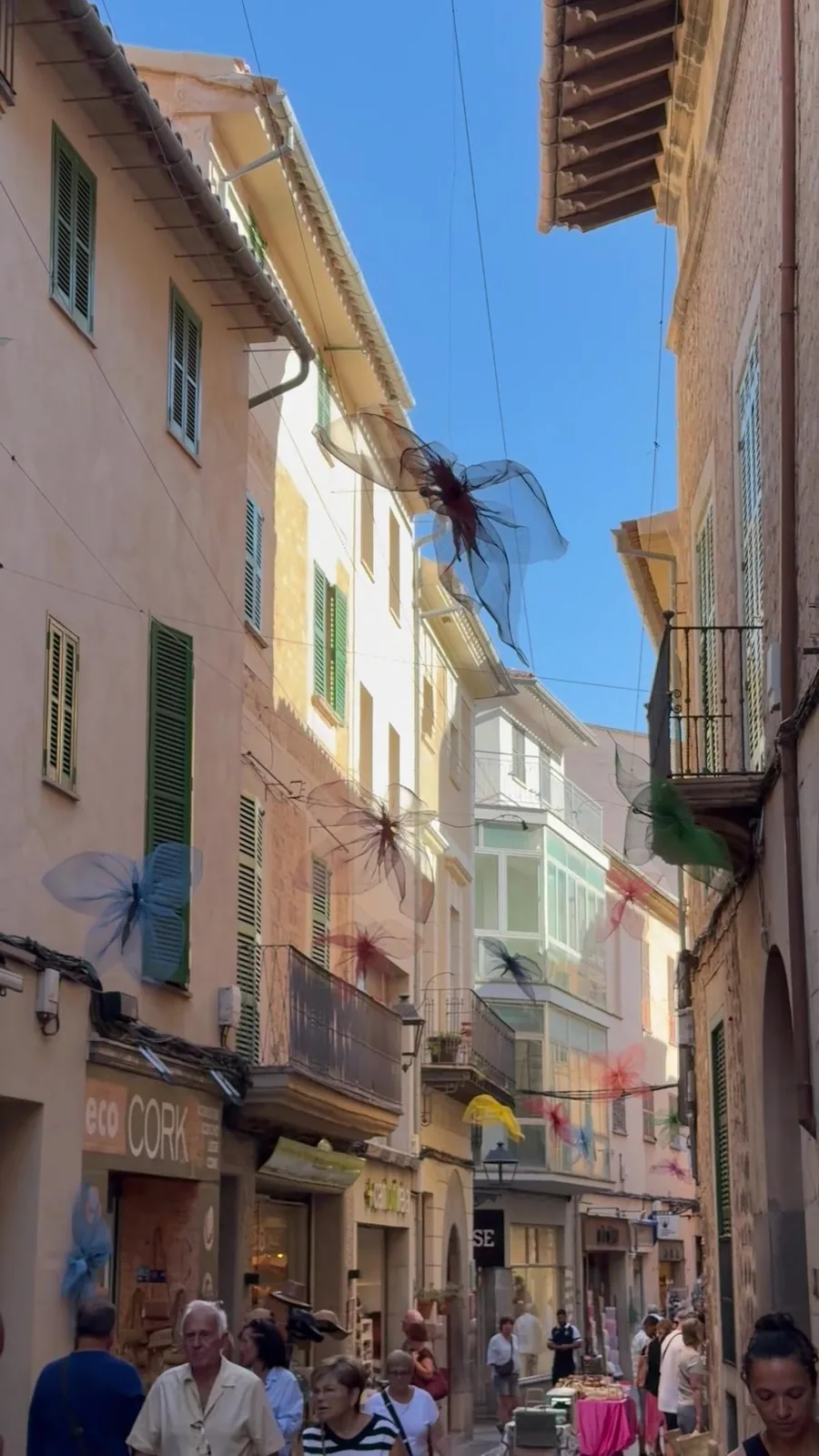
Above one lane hang fabric dragonflies in turquoise, red and pink, and underneath them people walk past with their bags.
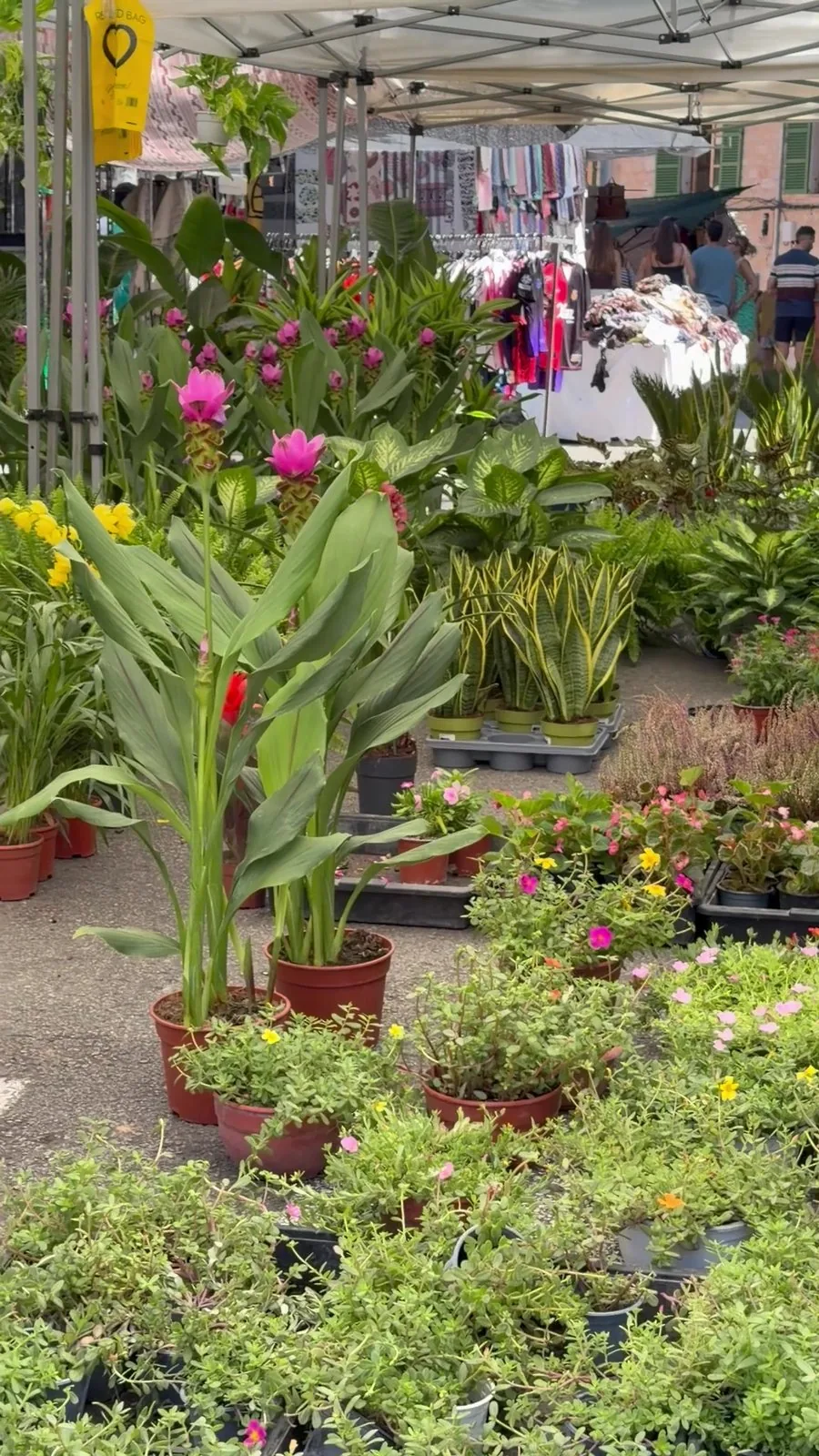
The first thing that catches me is the colour. A flower and plant stall under a white roof, pink curcuma at the front, next to it green in every shade and pots right up to the edge of the lane. Not an arrangement, simply a lot of plants side by side, exactly as they stood there that morning.
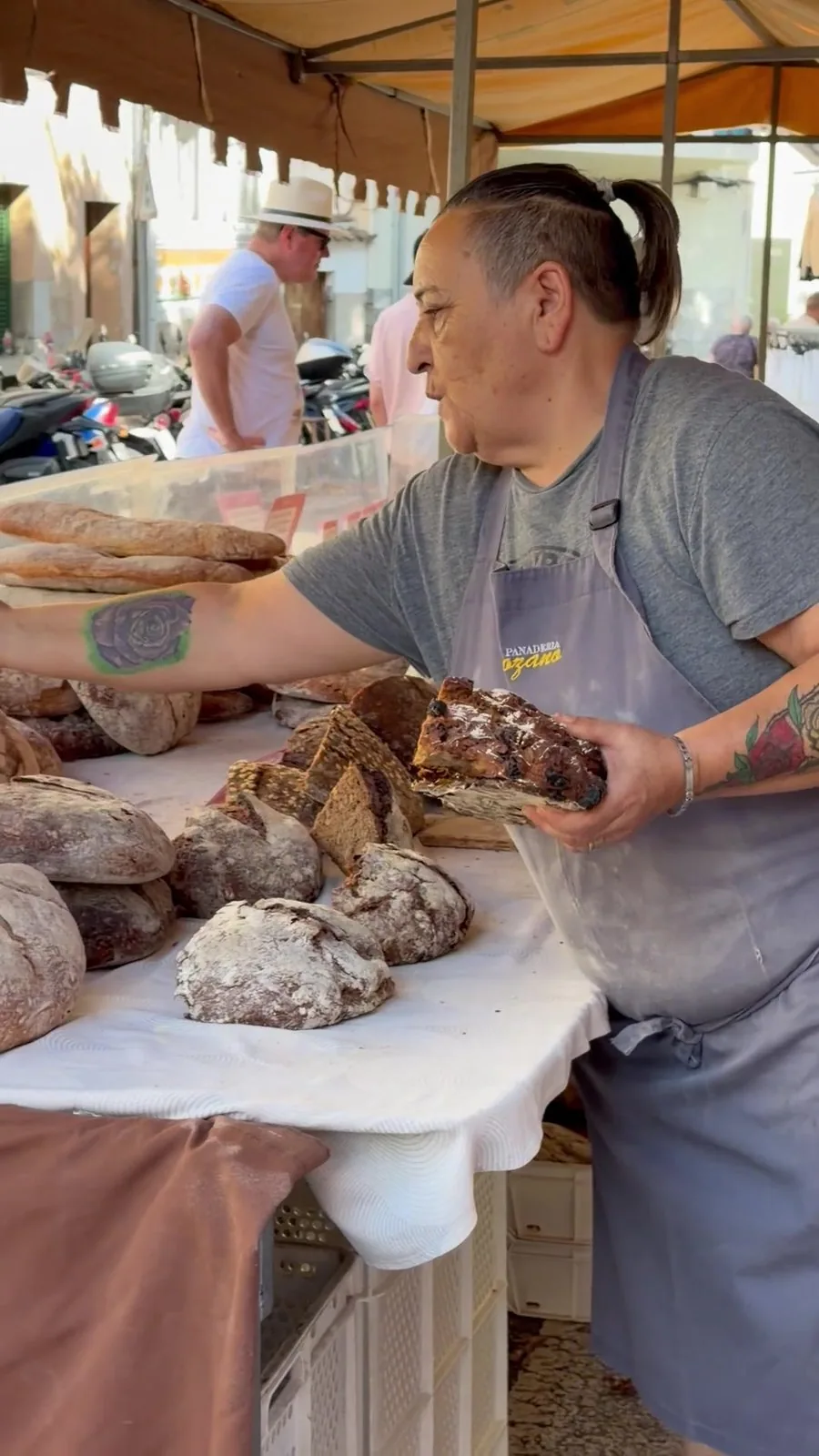
A little further on, the bread stall. Large, darkly baked loaves on a white cloth, and the woman selling them settles each one into place with both hands.
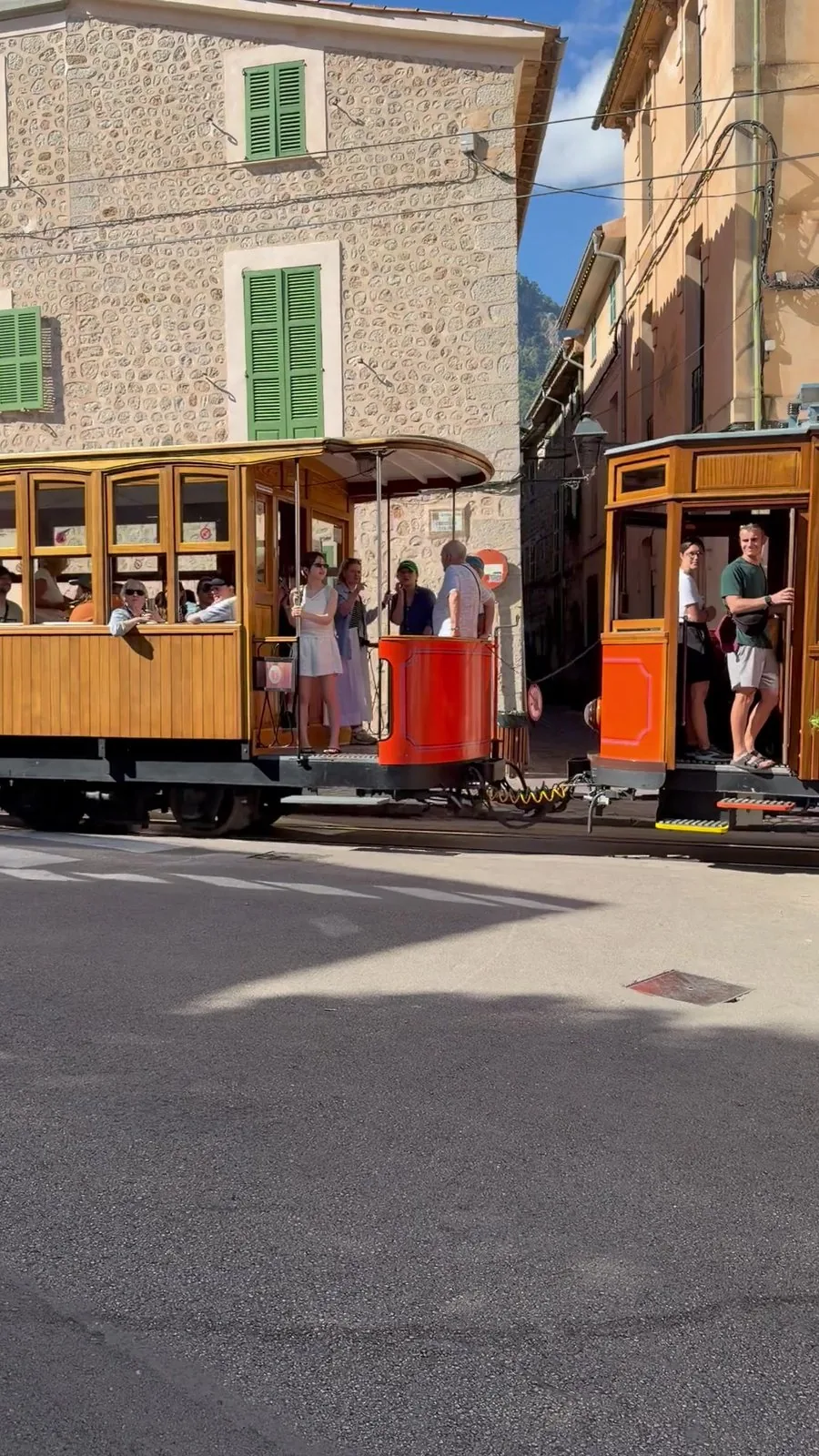
And then the tram comes through. Wooden carriages, open sides, full to the last seat, pushing its way between the houses and the people. This tram has run between Sóller and Port de Sóller since 1913.
What I look at on markets
I bought nothing. But I looked all the more closely: fabrics, colours, materials and the craft details that tell you how something is made.
In one shop window that morning hung Mallorcan ikat fabrics. With the traditional roba de llengües the pattern is already created in the yarn: the threads are dyed before weaving. That is why the outlines look soft and slightly irregular, and why the pattern is visible on both sides of the fabric. A cushion in the window carries a label: seven euros.
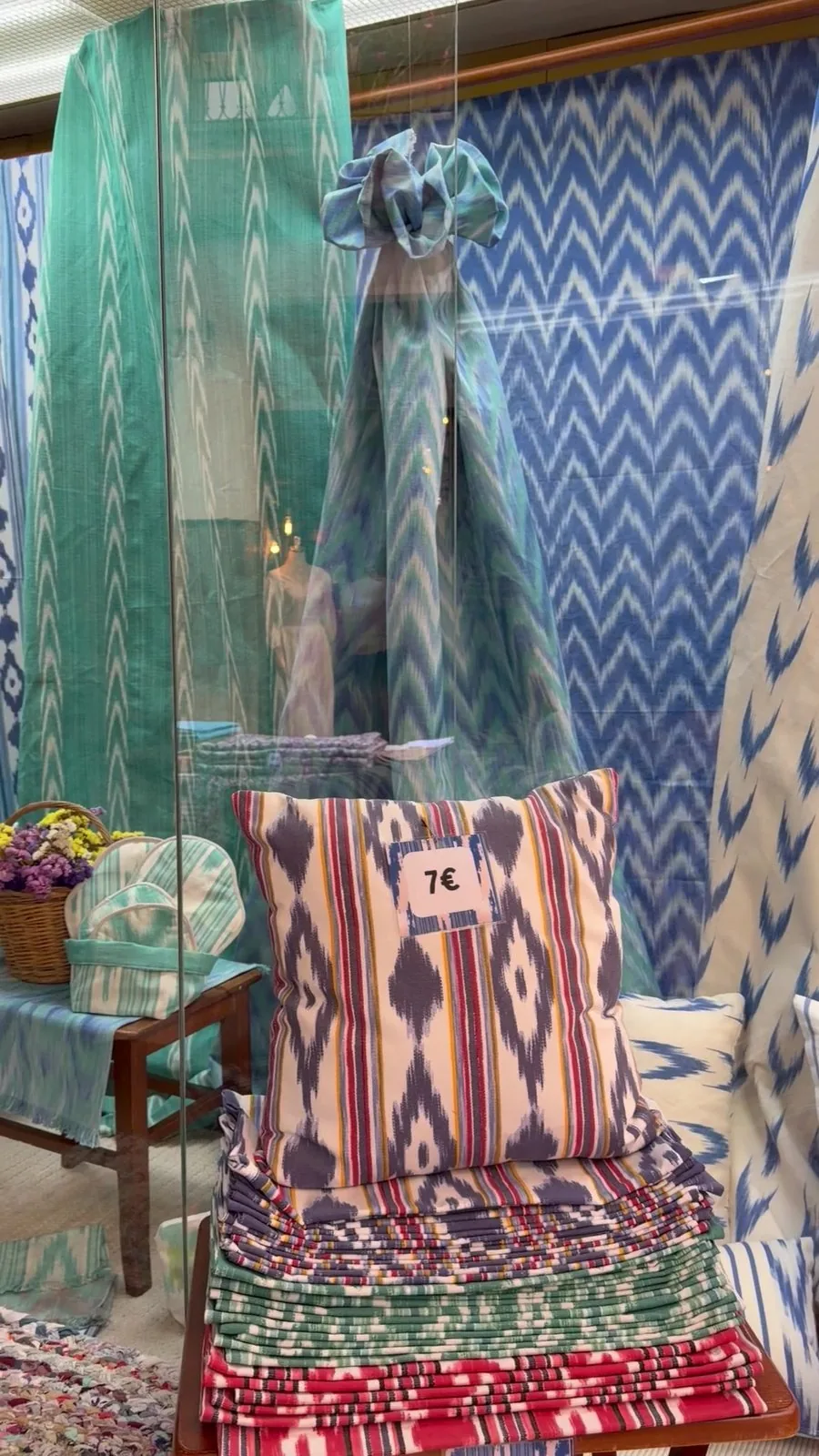
I stand in front of it longer than I need to. Not because I need a cushion, but because I want to see how the colour bleeds at the edges.
A few steps further on, a shop for cork goods, right in the middle of the market lane. Cork is light, warm in the hand, and the surface looks different on every single piece.
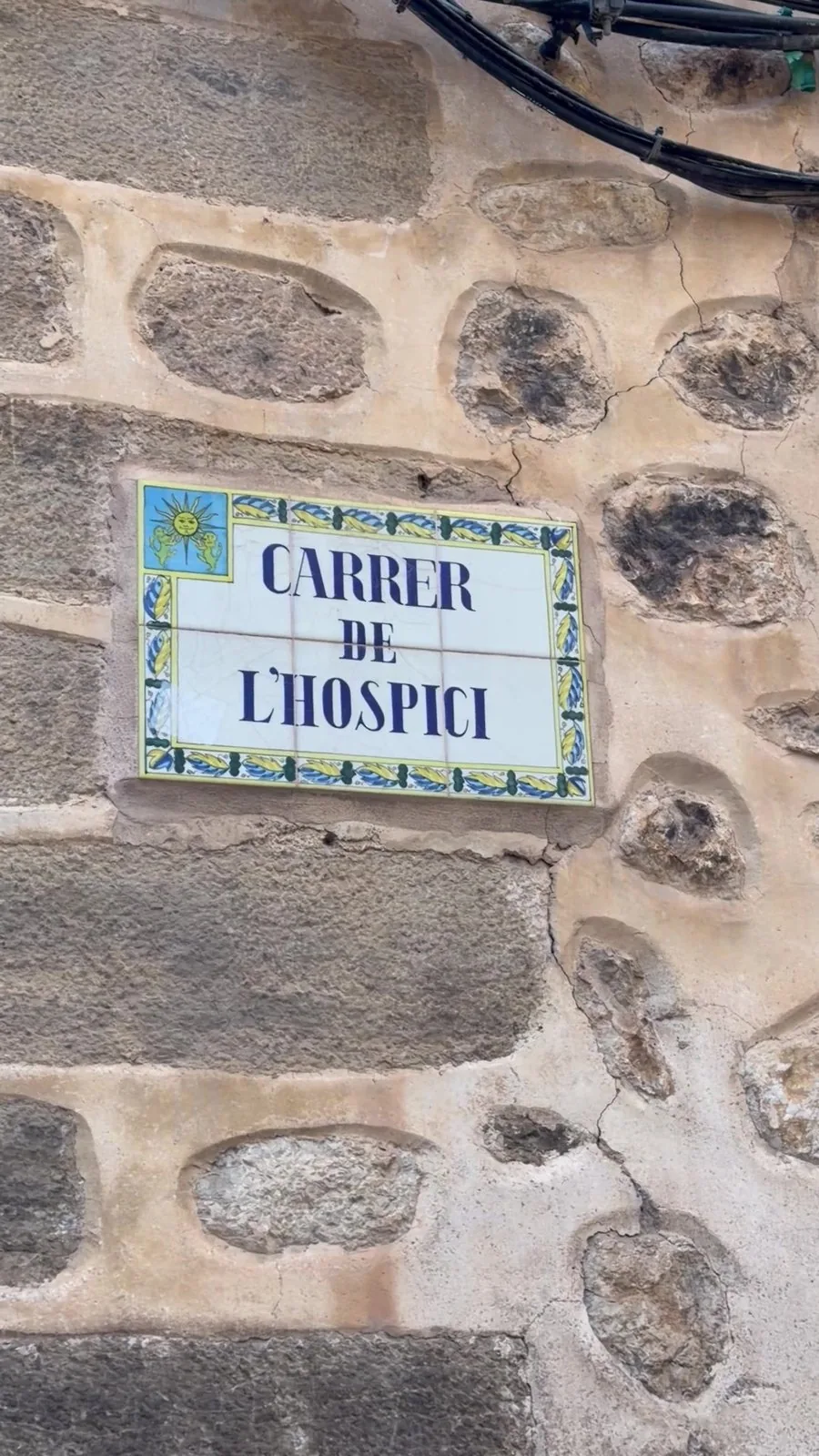
And in between, the small things you walk straight past. A street sign tile on rough stone, Carrer de l’Hospici, edged in blue, with a little sun in the corner. Sóller has more of these than you can take in over one morning.
The Sóller Bomb at Maria’s
At the end of my morning at the market I go to Maria at El Petit Cafeteria & Heladeria, the offshoot of El Petit Bistro. Her Sóller Orange Bomb is what I always drink here.
Martin Winkler created it in 2021. Instead of vanilla ice cream and heavy cream, the glass holds freshly pressed orange juice from the Sóller valley, yoghurt and orange ice cream, airy yoghurt foam and freshly grated orange zest. Light, fresh and exactly right after a morning at the market.
Because the oranges for it come from the Sóller valley, the Sóller Orange Bomb is only available seasonally, roughly from the beginning of February until the middle of November.
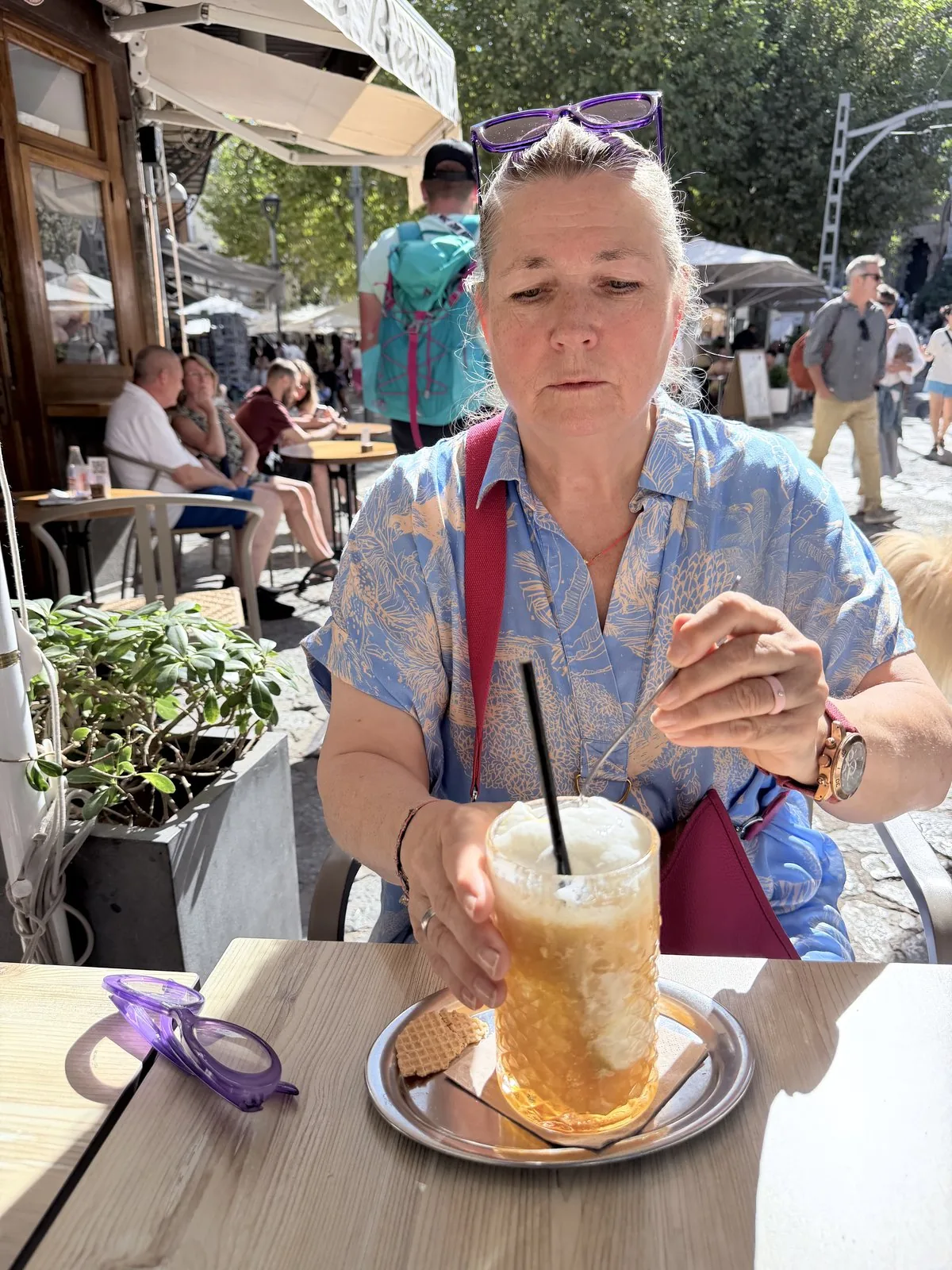
In front of me stands the Sóller Orange Bomb. On the table lie my glasses by Doubleice, and on my wrist I am wearing my watch by a cuckoo moment with its fuchsia stingray leather strap. The strong fuchsia glows next to the orange in the glass.
By midday nothing of the early morning can be felt any more, and that is fine. You simply have to have seen both: the empty lane and the crowded square.
What I mainly bring home from my travels is ideas.
Mercat de Sóller · Plaça Constitució and the surrounding lanes · 07100 Sóller · Mallorca · Saturday mornings
El Petit Cafeteria & Heladeria · Sóller · to the Sóller Orange Bomb
You will find all the posts from the valley in the Mallorca diary.
How a day like this in Sóller comes to an end: sundowner at the Nautilus in Port Sóller.
About El Petit Bistro: Wing, Juan and the Sóller Bomb at El Petit Bistro.
Warm wishes from Hamburg


